Get a Heating/Cooling System Quote in Minutes - Explore Our Options Today!




Back to Blog
Why Your Heat Pump Runs Constantly During a Virginia Heat Wave
Summer in Virginia brings a brutal combination of relentless sunshine and heavy, tropical humidity. When a severe heat wave settles across our communities, ambient temperatures frequently push well into the nineties while the heat index climbs above triple digits. Walking into your home during one of these extreme stretches, you might notice something concerning: your outdoor heat pump unit seems to be running non-stop without taking a break.
Hearing your cooling system hum continuously all day and night can trigger immediate panic. Many homeowners assume that constant runtime automatically means their system is broken, failing, or burning through massive amounts of electricity. While an underlying mechanical defect can certainly cause efficiency losses, a heat pump running long cycles during extreme weather is often performing exactly as it was engineered to do. SoGood, Plumbing, Heating, & Air has been keeping local households cool, dry, and informed for years. This guide breaks down the engineering principles behind constant summer heat pump operation, how to distinguish normal behavior from a true mechanical emergency, and how to keep your home comfortable when the weather gets tough.
Design Temperatures: Understanding Your System’s Thermal Limits
To understand why your heat pump rarely turns off during a severe heat wave, you have to look at how residential HVAC systems are sized and designed by building science engineers.
The 95-Degree Design Threshold
Air conditioners and heat pumps are not sized to cool your home to 68°F on the hottest day in recorded history. Instead, engineers calculate equipment size using regional Manual J load calculations, which rely on a 1% outdoor design temperature. In most parts of Virginia, that design benchmark sits right around 95°F.
When outdoor temperatures stay below 95°F, your heat pump has plenty of excess capacity, allowing it to cool your home quickly and cycle off. However, when a summer heat wave pushes temperatures beyond that design limit, the rate of heat invading your home through your roof, windows, and walls accelerates rapidly. At this point, your heat pump is operating at 100% capacity simply to match the incoming heat load, causing it to run continuously just to hold your indoor temperature steady.
Modern Variable-Speed Inverter Technology
If your home is equipped with a modern variable-speed or multi-stage inverter heat pump, continuous operation is actually its primary feature, not a bug. Unlike older single-stage systems that operate like a simple light switch (100% ON or 100% OFF), variable-speed units automatically ramp their compressor speeds up or down in tiny increments.
During a heat wave, an inverter system will throttle down to run continuously at a low, highly efficient speed (such as 30% or 50% capacity) to maintain a rock-solid indoor temperature and continuously wring humidity out of the air. This long, steady run cycle uses significantly less electricity than a single-stage unit constantly stopping and starting under heavy electrical loads.
When Constant Runtime Signals a Mechanical Problem
While long run cycles during peak outdoor temperatures are completely normal, there is a fine line between a heat pump working hard against the weather and one struggling against a hidden component failure. If your heat pump runs non-stop and your indoor temperature continuously climbs several degrees above your thermostat setpoint, your system is likely suffering from a performance bottleneck.
1. Dust-Choked Air Filters and Restricted Airflow
The most common cause of an overtaxed heat pump is a simple lack of airflow. When your indoor air filter becomes packed with household dust, pet dander, and pollen, it acts like a wall inside your ductwork. Your indoor fan motor cannot pull enough warm household air across the cold evaporator coil, causing thermal heat transfer to drop to a crawl. The heat pump will run indefinitely trying to satisfy the thermostat simply because it cannot move conditioned air into your rooms.
2. Dirty Outdoor Condenser Coils
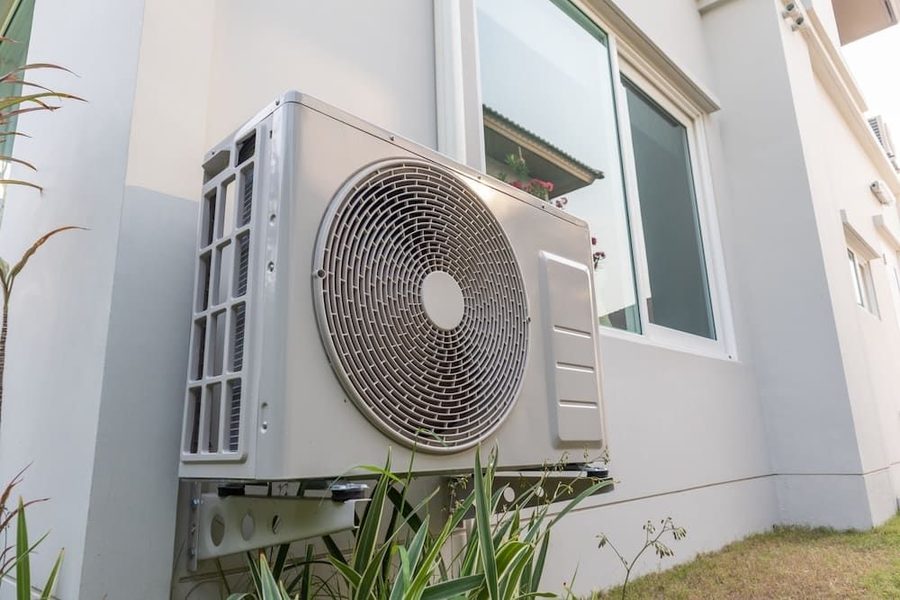
Your heat pump cannot cool your living space without dumping the heat it extracted from your home out into the surrounding atmosphere through its outdoor unit. Over a busy spring season, mower clippings, dirt, pollen, and leaves get sucked into the aluminum fins surrounding the outdoor condenser coil. This layer of grime acts like an insulating blanket, trapping heat inside the refrigerant loop and preventing the system from cooling your home efficiently.
3. Microscopic Refrigerant Leaks
A heat pump relies on a precise, factory-balanced charge of chemical refrigerant to transport heat out of your home. If a microscopic leak develops along a copper joint or coil seam, the chemical pressure inside the sealed loop will drop. Low refrigerant levels destroy the system’s heat-exchange capacity, forcing the compressor to run 24/7 while blowing weak, lukewarm air from your supply vents.
Practical Steps to Ease the Strain on Your Heat Pump
When a severe Virginia heat wave strikes, you can take several immediate steps to reduce your home’s total thermal load, helping your heat pump keep up without overworking its components:
-
Maintain Thermostat Discipline: Avoid setting your thermostat down to 65°F during a heat wave in hopes of cooling the house faster. Set your thermostat to a reasonable target (such as 74°F–78°F) and leave it there. Cranking the setpoint down will not make the air coming out of the vents any colder; it will only force the system to run indefinitely.
-
Block Radiant Sun Exposure: Close your blinds, curtains, and solar shades on all south- and west-facing windows during the afternoon. Direct sunlight passing through window glass adds immense radiant heat to your living spaces.
-
Manage Indoor Humidity and Heat: Avoid using heat-generating appliances, such as clothes dryers, dishwashers, and stovetops, during the hottest afternoon hours. Use bathroom exhaust fans during showers to vent humid air directly outside.
-
Inspect and Swap Your Air Filter: Check your indoor filter monthly during the peak cooling season. Installing a fresh, clean filter instantly restores air velocity and reduces electrical strain on your blower motor.
Safeguarding Your Equipment and Securing Summer Comfort
Taking a proactive approach to your home’s heat pump infrastructure is the most reliable way to prevent sudden seasonal breakdowns and keep your monthly energy expenses in check. While basic household habits like swapping out dirty filters, closing window blinds, and keeping tall grass trimmed away from your outdoor cabinet are great ways to ease system stress, diagnosing delicate chemical refrigerant leaks, checking high-voltage capacitors, and deep-cleaning delicate aluminum coil fins requires specialized commercial tools and professional trade training.
Continuing to let an overtaxed or malfunctioning heat pump struggle against severe summer heat wave conditions is a high-stakes gamble that leads directly to premature compressor burnouts, frozen indoor coils, and inflated utility bills. Making the proactive choice to schedule a professional precision tune-up before peak weather hits ensures your equipment operates at peak factory efficiency, extends your system’s overall lifespan, and keeps your property cool, dry, and comfortable through every hot stretch of the year.
Contact us today to get your heat pump service scheduled!
Recent News
Whole-Home Dehumidifier vs “Lower the Thermostat” for Richmond Humidity
The #1 Reason Newer Homes Still Have Musty Smells: Crawl Space Moisture in Hanover County
Is Your AC Ready for a Virginia Summer? 5 Red Flags You Can’t Ignore in May
Emergency Drain Clogs in Powhatan: When to Call a Pro vs. DIY Risks
Beating the Central Virginia Humidity: Why Your AC Feels Like It’s “Not Cooling”
The Central Virginia Spring Readiness Checklist: Preparing Your Richmond Home for Unpredictable Weather