Get a Heating/Cooling System Quote in Minutes - Explore Our Options Today!




Back to Blog
Whole-Home Dehumidifier vs “Lower the Thermostat” for Richmond Humidity
Summers across Richmond, Virginia, from historic Fan District townhomes and Museum District properties to modern builds in Short Pump, Midlothian, and Henrico, are defined by heavy, muggy heat. When subtropical moisture sweeps up the James River valley, outdoor relative humidity frequently climbs past 70% to 80%.
To combat this oppressive stickiness, many Richmond homeowners instinctively walk over to the thermostat and drop the temperature from 75°F down to 68°F. While lowering the setpoint forces your air conditioner to run longer, it is an inefficient and costly way to tackle moisture.
Understanding the difference between sensible cooling (lowering air temperature) and latent cooling (removing moisture) is the key to true summer comfort. SoGood Plumbing, Heating & Air provides trusted HVAC and indoor air quality solutions throughout the Greater Richmond area. This guide compares relying on your AC thermostat versus installing a dedicated whole-home dehumidifier, helping you choose the most effective strategy for your home.
The Physics of Richmond Moisture: Temperature vs. Humidity
Your central air conditioner or heat pump is primarily engineered to manage air temperature. While it removes some water vapor as warm air passes over its cold evaporator coil, moisture removal is merely a secondary byproduct of the cooling cycle.
When indoor relative humidity sits above 55%, moisture on your skin cannot evaporate efficiently. A room at 72°F with 65% humidity feels heavy, warm, and clammy. However, if you lower the humidity down to a crisp 45%, that exact same room feels refreshingly cool at 75°F.
Relying solely on your air conditioner to manage heavy Virginia moisture forces the unit into long, energy-draining cooling cycles that overcool your living spaces without ever achieving ideal humidity balance.
Strategy 1: “Lower the Thermostat” (The Reactive Approach)
Dropping your thermostat setpoint forces your air conditioner’s compressor and blower fan to run continuously. While this lowers the room temperature, it introduces several mechanical and financial drawbacks:
-
Soaring Monthly Electric Bills: Running a high-draw 3-ton or 5-ton AC compressor non-stop to remove stubborn humidity dramatically increases monthly power bills throughout June, July, and August.
-
The “Cold and Clammy” Effect: Air conditioners cool air faster than they can wring water out of it. Overcooling a room drops the temperature quickly while leaving moisture trapped in the air, creating a chilly, clammy environment where sheets and furniture feel damp.
-
Risk of Evaporator Coil Freezing: Running your AC continuously at low temperature setpoints during humid weather increases the risk of moisture freezing on the evaporator fins, forming a solid block of ice that blocks airflow and can cause compressor failure.
-
Accelerated Equipment Wear: Extended run-times place heavy thermal and electrical strain on compressor windings, fan bearings, and capacitors, shortening the operational lifespan of your HVAC system.
Strategy 2: Whole-Home Dehumidification (The Dedicated Solution)
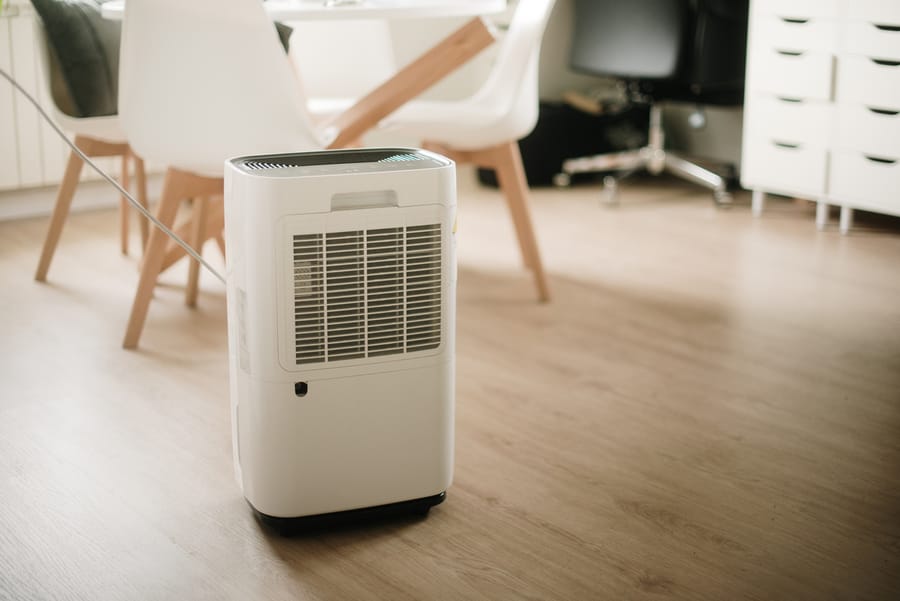
A whole-home dehumidifier is a dedicated appliance integrated directly into your home’s ductwork. It operates independently of your air conditioner, pulling up to 70 to 130+ pints of moisture per day out of the air stream before distributing crisp, dry air into every room.
-
Independent Moisture Control: A dedicated dehumidifier runs only when indoor humidity surpasses your target setting (e.g., 45% to 50%), regardless of indoor air temperature.
-
Lower Cooling Costs: By maintaining 45% humidity, you can comfortably raise your thermostat setpoint from 70°F to 75°F or 76°F. According to the U.S. Department of Energy, every degree you raise your thermostat saves up to 3% to 5% on monthly cooling costs.
-
Protection Against Mold and Dust Mites: Dust mites thrive, and toxic mold spores germinate when relative humidity exceeds 55% to 60%. Whole-home dehumidification keeps humidity in the safe 40% to 50% zone, protecting drywall, hardwood floors, and crawl space framing.
-
Low Power Draw: Whole-home dehumidifiers utilize small, high-efficiency compressors that consume a fraction of the electricity required to run a central air conditioner.
Strategy Comparison: Thermostat Adjustment vs. Whole-Home Dehumidifier
“Lower the Thermostat” Approach
-
Primary Target: Lowers air temperature (Sensible cooling only).
-
Humidity Control: Poor (Inconsistent, secondary removal).
-
Indoor Comfort Level: Often cold, damp, and clammy.
-
Monthly Energy Impact: High (Drives up electric bills).
-
Equipment Wear: High (Forces non-stop AC compressor cycles).
-
Mold & Dust Protection: Minimal (Humidity fluctuates above 55%).
Dedicated Whole-Home Dehumidifier
-
Primary Target: Precise relative humidity removal (Latent cooling).
-
Humidity Control: Excellent (Maintains exact 45%–50% setpoint).
-
Indoor Comfort Level: Crisp, dry, and consistently comfortable.
-
Monthly Energy Impact: Low (Allows higher AC setpoints, cutting overall power costs).
-
Equipment Wear: Low (Reduces total AC run-time).
-
Mold & Dust Protection: Maximum (Keeps indoor humidity below allergen thresholds).
Protecting Historic Richmond Architecture and Crawl Spaces
Richmond’s classic housing stock, including historic brick homes in The Fan, crawl-space foundations in Midlothian, and finished basements across Henrico, is particularly sensitive to unmanaged humidity.
High indoor moisture causes original hardwood floors to cup, plaster walls to degrade, and doors to stick in their frames. Additionally, damp crawl spaces draw humid air upward into living spaces through the “stack effect.”
Pairing a whole-home dehumidifier with proper duct sealing or crawl space encapsulation protects your property’s structural integrity while ensuring healthy indoor air quality year-round.
Take Control of Your Home’s Climate This Summer
Stop overworking your air conditioner and paying high electric bills just to battle sticky indoor air. Investing in dedicated whole-home dehumidification allows you to set your thermostat higher, cut monthly energy costs, and enjoy dry, crisp comfort through every Virginia summer heatwave.
Taking a smart, specialized approach to moisture control protects your home’s structure, extends your HVAC equipment’s lifespan, and keeps your family healthy.
Breathe easier and optimize your home’s comfort today. Contact SoGood Plumbing, Heating & Air to schedule your indoor air quality evaluation!

Recent News
Water Heater Recovery Time Problems in Powhatan: Repair or Replace?

SoGood Expands With Expert Electrical Services in Richmond, VA
Why Your Heat Pump Runs Constantly During a Virginia Heat Wave
The #1 Reason Newer Homes Still Have Musty Smells: Crawl Space Moisture in Hanover County
Is Your AC Ready for a Virginia Summer? 5 Red Flags You Can’t Ignore in May
Emergency Drain Clogs in Powhatan: When to Call a Pro vs. DIY Risks