Get a Heating/Cooling System Quote in Minutes - Explore Our Options Today!




Back to Blog
Hard Water vs. Your Water Heater: Why Chesterfield & Hanover Homes Need a Protective Strategy
In the suburbs of Richmond, specifically across Chesterfield and Hanover Counties, homeowners often take the quality of their water for granted. While the water flowing from the taps is safe and treated, it carries a hidden characteristic that can quietly dismantle your home’s plumbing infrastructure: it is “hard.” Hard water is not a health risk for your family, but it is a major financial risk for one specific appliance: your water heater.
Because the water in our region often carries high concentrations of minerals like calcium and magnesium, your water heater is under constant biological and chemical stress. Over time, these minerals settle and solidify, turning your efficient heating system into a struggling, sediment-filled tank that costs more to run and fails years before it should.
At SoGood Plumbing, Heating & Air, we believe that understanding the “Hard Water Tax” is the first step toward protecting your home. In Chesterfield and Hanover, a proactive strategy is not just a luxury; it is a necessity for anyone who wants to avoid the mess and expense of a premature water heater replacement. In this blog, we will explore the science of scale and why your water heater needs a defensive plan.
The Science of Scale: How Hard Water Attacks
To understand why hard water is so destructive, you have to look at what happens inside the tank when the temperature rises. When hard water is heated, the dissolved minerals (calcium and magnesium) undergo a chemical change. They precipitate out of the liquid and turn into a solid, rock-like substance known as “scale.”
The Settling Process
This scale does not just disappear. Because it is heavier than water, it sinks to the bottom of the tank. Year after year, this layer of mineral sediment grows thicker.
-
The Insulating Barrier: In a gas water heater, the burner is located at the very bottom of the tank. When a thick layer of sediment settles there, it acts as a thermal insulator. The burner has to heat through inches of “rock” before it can even begin to heat the water inside.
-
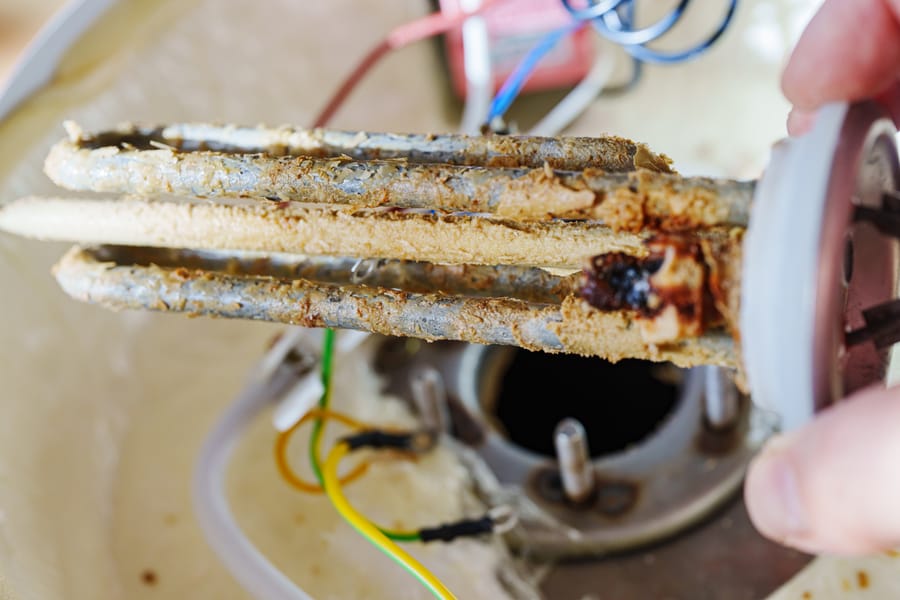
Element Burnout: In electric water heaters, the scale clings directly to the heating elements. This causes the elements to overheat and “snap,” leading to a sudden loss of hot water.
-
Tank Displacement: As sediment fills the bottom of the tank, there is less room for actual water. This is why you might notice your showers getting shorter over the years.
Why Chesterfield and Hanover Homes are at Risk
The geography of Virginia plays a significant role in your plumbing health. Many homes in Hanover and Chesterfield rely on groundwater sources or municipal systems that draw from mineral-rich basins. This means the “hardness” level in our area is often high enough to cause noticeable issues within just a few years of a new installation.
Signs Your System is Struggling
If you live in our service area, you should be on the lookout for these classic symptoms of hard water damage:
-
Popping or Rumbling Noises: This is often called “kettling.” It happens when water gets trapped beneath the layer of sediment and boils, creating steam bubbles that pop like a percolator.
-
Fluctuating Temperatures: If your water goes from hot to lukewarm and back again, it is a sign that your thermostat is being “confused” by the thick layer of scale surrounding it.
-
Higher Utility Bills: If your gas or electric bill is creeping up but your usage hasn’t changed, your water heater is likely running much longer than it should to overcome the mineral barrier.
The Financial Impact of the “Hard Water Tax”
Ignoring hard water is a choice to pay more money every month. The “Hard Water Tax” comes in three forms: energy waste, repair costs, and premature replacement.
Reduced Energy Efficiency
According to studies by the Water Quality Research Council, water heaters running on hard water can lose up to 25% to 30% of their efficiency over their lifespan. In a typical Chesterfield home, that translates to hundreds of dollars in wasted energy every year. Your system is essentially “spinning its wheels,” consuming fuel to heat up a layer of rocks rather than the water you need for your laundry and dishes.
Frequent Repairs and Service Calls
Hard water is abrasive. Beyond just scale buildup, the minerals can wear down the internal components of your plumbing system.
-
Failing Valves: The “dip tube” and “drain valve” can become brittle or clogged with mineral flakes, making it impossible to service the unit when you finally try to flush it.
-
Anode Rod Depletion: Your water heater has a “sacrificial” anode rod designed to prevent the tank from rusting. Hard water can accelerate the consumption of this rod, leaving your steel tank vulnerable to corrosion and leaks.
Premature System Failure
The average lifespan of a water heater should be 10 to 12 years. However, in the mineral-heavy environments of Hanover County, we often see unprotected units fail in as little as 6 or 7 years. The constant overheating caused by sediment buildup weakens the steel tank, eventually leading to a crack and a catastrophic flood in your basement or utility closet.
A Protective Strategy: How to Fight Back
The good news is that you do not have to let hard water win. At SoGood Plumbing, Heating & Air, we recommend a multi-layered protective strategy to keep your water heater running at peak performance.
1. Annual Professional Flushing
This is the simplest and most effective way to manage sediment. A professional flush involves more than just draining the tank; it involves a high-pressure rinse to break up and remove the solidified minerals from the bottom of the unit.
-
Restoring Efficiency: Removing the sediment allows the burner or element to heat the water directly again.
-
Extending Life: A clean tank doesn’t suffer from the “overheating” stress that leads to tank failure.
2. Anode Rod Inspection
We recommend checking your anode rod every two to three years. If the rod is “eaten away,” we can replace it for a fraction of the cost of a new water heater. This simple step keeps the interior of your tank from rusting.
3. Whole-Home Water Softening
For the ultimate protection, many Hanover and Chesterfield homeowners are opting for whole-home water softeners. These systems use a process called “ion exchange” to remove calcium and magnesium before the water ever enters your plumbing system.
-
Eliminating the Root Cause: With soft water, scale never forms in the first place.
-
Broader Benefits: Soft water also protects your dishwasher, washing machine, and even your skin and hair from the harsh effects of minerals.
Protect Your Comfort and Your Wallet
Is your water heater working harder than it should? At SoGood Plumbing, Heating & Air, we are experts in the unique water challenges of the Richmond area. Whether you need a professional tank flush to clear out years of sediment or you want to explore water softening options for your home, our team is ready to help.
Contact us today to schedule your water heater assessment and start protecting your home from the damaging effects of hard water.
Recent News
The Central Virginia Spring Readiness Checklist: Preparing Your Richmond Home for Unpredictable Weather
When to Replace Your Furnace vs Repair: Central Virginia Edition

How Richmond’s Aging Homes Create Hidden Plumbing Challenges in Winter

Why Sudden Cold Spells in Central Virginia Overwork Heating Systems
Is It Time to Replace Your Water Heater? 6 Signs RVA Homeowners Shouldn’t Ignore

Top 10 Indoor Air Quality Myths & How to Test Your Home in RVA